Public parks are an investment in people’s health, safety and long-term well-being, and the community fitness equipment you select will determine whether residents maximize this amenity’s full potential or ignore it.
According to National Recreation and Park Association research, wanting to exercise was one of the top three reasons people visited parks and recreational facilities. That statistic highlights the growing momentum behind outdoor fitness equipment parks that turn neighbors into workout buddies.
So, what does that energy and enthusiasm look like up close?
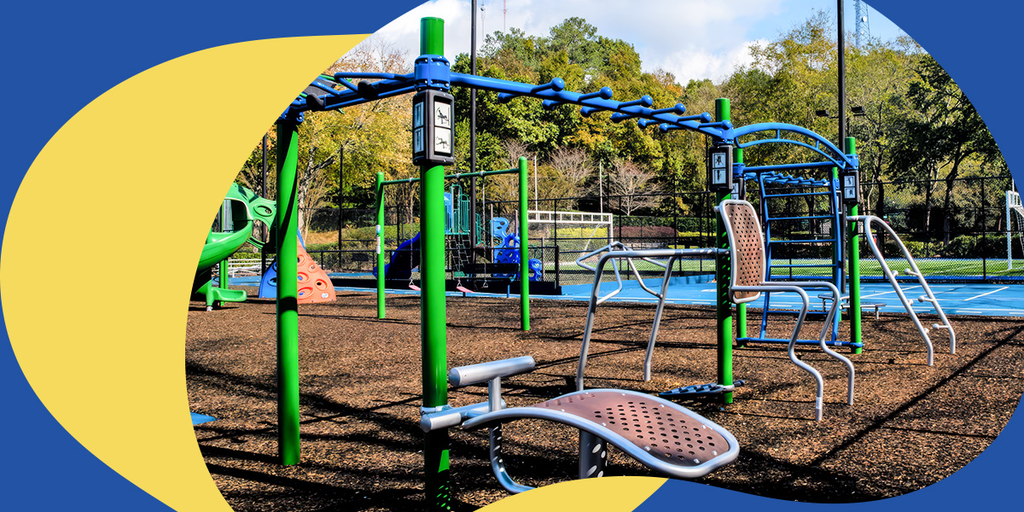
Quality park exercise equipment mixes movement types to serve every fitness level, and well-designed adult fitness parks blend cardio, strength and functional stations so nobody gets stuck standing on the sidelines.
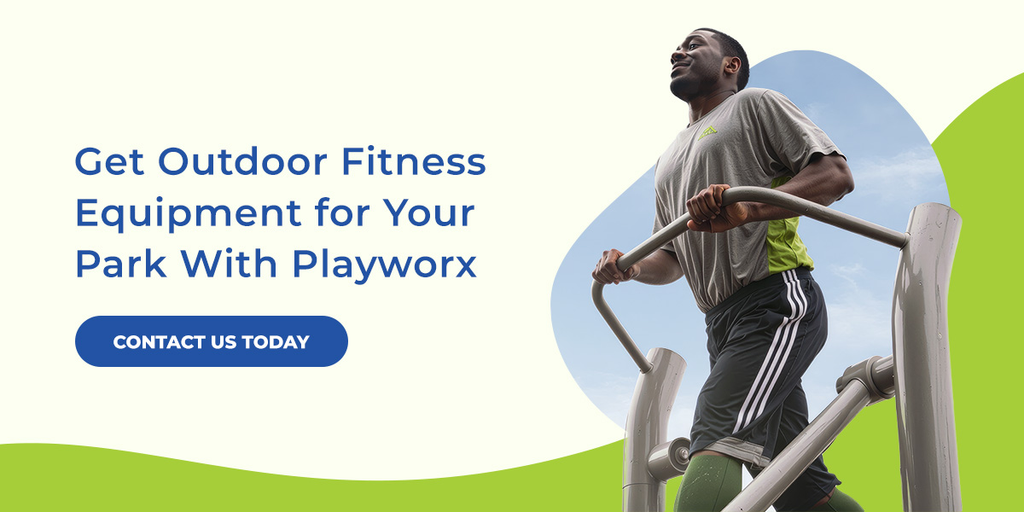
Beginners and lifelong exercisers alike benefit from cardio equipment. Outdoor ellipticals, air walkers, exercise bikes and rowing machines need no electrical hookup and barely any instruction. Even a first-timer can hop on without a second thought. These public park fitness stations tend to attract older adults and newcomers seeking a gentle and low-impact entry point.
Pull-up bars, dip stations, press stations, ab stations and row stations round out the muscle-building side of the park. Arrange them well, and suddenly you’ve got compact outdoor gyms that pack serious variety into a smaller footprint. Many parks use ActionFit fitness structures to combine these stations in a single, compact layout, so budget and space restrictions don’t limit what your park can offer.
Now for the fun part. Monkey bars, arc traverses, rope climbs, step stations and obstacle-style rigs challenge higher-energy users and open the door to group programming that keeps people coming back. Outdoor obstacle courses are a high-engagement option for parks that want to draw a crowd, and the same equipment gives trainers a setup that rivals group fitness studios, minus the walls and the membership fee.
The Centers for Disease Control and Prevention note that people with safe access to parks and recreation facilities tend to stay more physically active than those who encounter barriers to access. Low-height units, hand cycle stations and multi-use stations built for wheelchair access open the park to the widest possible range of visitors.
Building a commercial outdoor gym that truly serves your community means looking past the sticker price and prioritizing the attributes that protect your investment for years.
Deteriorating equipment, vandalism and surprise repair bills are among a parks director’s biggest headaches. Commercial-grade steel, powder-coat finishes and corrosion-resistant hardware stand up to daily wear far better than anything built for a backyard. Sealed hardware keeps moisture and debris out of moving parts, while UV-resistant materials hold their color and strength even under direct sunlight.
These qualities are essential in high-humidity climates like those found in Florida, Georgia and South Carolina, where less durable materials break down faster. Well-built outdoor fitness parks in these regions rely on materials engineered specifically for that kind of punishment.
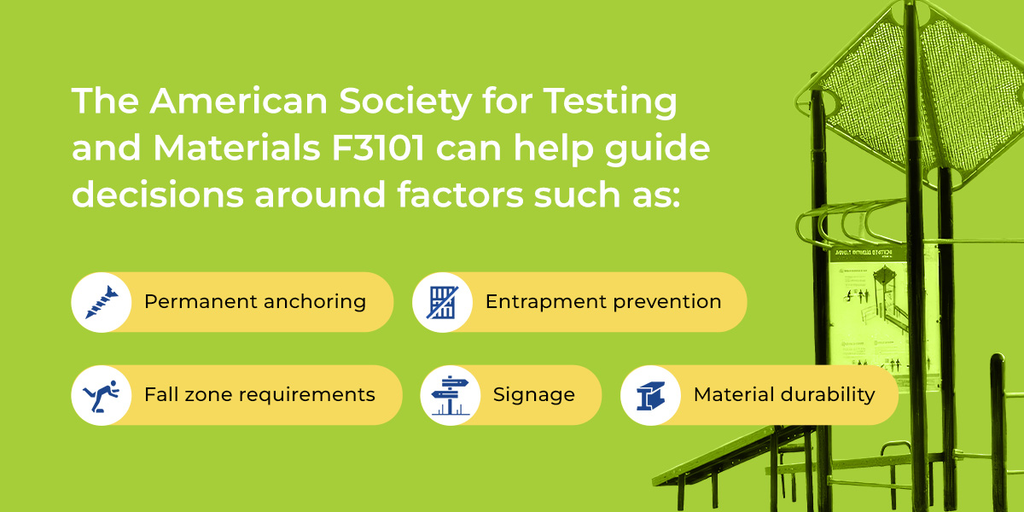
The American Society for Testing and Materials F3101 sets specifications for unsupervised public-use outdoor fitness equipment intended for users ages 13 and up. It can help guide decisions around factors such as:
Municipalities increasingly reference the ASTM F3101 standards during procurement, and treating it as a decision-making tool rather than a bureaucratic checkbox makes your purchase easier to defend to a budget committee.
Look for suppliers who have earned Certified Playground Safety Inspector credentials and can walk you through safety certifications and standards before you sign anything.
Equipment is only a sensible investment if people actively use it. Intuitive design principles create a more well-rounded experience for park visitors. Instructional signage and machines engineered to accommodate a range of fitness levels invite everyone, from first-time exercisers to seasoned athletes, onto the same fitness loop. Parks that welcome a full range of visitors will see people return day after day to reap the rewards. NRPA research found that 84% of park and recreation agencies offer in-person fitness and exercise programs, indicating that the appetite for structured, accessible programming continues to climb.
A lower up-front price tag often translates into additional expenses in the future. Sealed moving parts, rust-resistant fasteners and a lean mechanical footprint all cut down on the maintenance calls that eat into your bottom line.
Warranty length varies by supplier and material, so always request warranty documentation before you commit to anything. And don’t forget to factor in safety surfacing, signage and installation alongside the equipment when calculating how much everything will cost.
Now that you know the equipment types and the features worth prioritizing, here’s how to pull it all together before you contact a supplier.
Start with your community, not a catalog. Who’s going to use this space, and what fitness goals matter most to them? A dense downtown park might call for a compact gym layout, while a sprawling suburban trail practically begs for a distributed fitness path. A thoughtful mix of equipment types taps into the proven benefits of outdoor fitness parks and earns broad community appeal, making the investment easier to justify to stakeholders holding the purse strings.
The sticker price is only one piece of the puzzle. Total cost of ownership includes the equipment itself along with installation, surfacing, signage and the maintenance that keeps everything running for years. Rather than getting hung up on one number, ask your supplier for a quote based on your specific site and scope, since costs shift depending on size, terrain and the equipment mix you choose. Remember to factor all these variables into your budget.
A CPSI-certified supplier handles the heavy lifting, from CAD planning through ASTM compliance to installation and ongoing maintenance, so you never have to figure things out alone. An experienced partner can turn a long checklist into a straightforward, guided process. See what that looks like from planning to installation, and you’ll understand how much smoother the experience will be with a knowledgeable team beside you.
Playworx shines in bringing parks together for communities across Georgia, Florida and South Carolina. As a CPSI-certified distributor for Little Tikes Commercial, we’ll partner with you to complete the whole project, from CAD design to installation to future maintenance calls. Need safety surfacing, shade structures or site amenities too? Consider it handled, all under one roof.
Whether you’re after commercial park solutions or a fresh lineup of outdoor fitness equipment, our team is ready to build something your community will enjoy for years. Reach out to us today, and let’s get your park’s next chapter started.